Skip to content
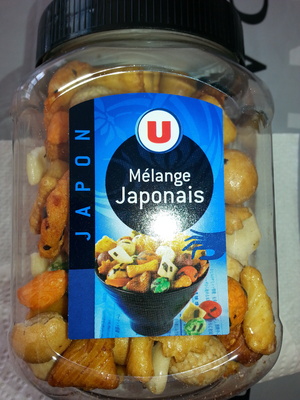
Mélange japonais
Mélange japonais - U with score 90/100

Mélange japonais - European Score 90/100

U

Mélange japonais by U is rated 90/100 according to our European origin criteria. Excellent choice! This product strongly supports the European economy.

It is a food product found in 1 countries. Manufacturing reported in: Thaïlande.

180g

3256220666084
🛡️ Data verified by Open Food Facts
🍽️ Food

Nutritional Scores

Nutri-Score
D
Eco-Score
B
NOVA
4

Ingredients

riz, cacahuètes, farine de blé, sauces soja (eau, graines et farine de soja, sel, farine de blé, dextrose de tapicoa), sucre, graines de sésame, algues, E141, E160a, E150a, E160c, sirop de glucose de tapioca, amidon transformé de tapioca, sel, piment

Allergens

gluten, peanuts, sesame seeds, soybeans

Origin Data

Countries france
Manufacturing Places Thaïlande
EMB Code EMB 81163
Packaging Pot en plastique

European Score

0 /100
Purebred European

"More European than the Eurovision Song Contest."

Detailed Breakdown:

Scoring Methodology
Headquarters 35/35
Manufacturing 35/35
Ingredients 0/10
Distribution 15/15
Proximity +5

Analysis:

  • Corporate headquarters in France & Monaco (+35 pts)
  • European packaging code (EMB 81163) (+35 pts)
  • Main ingredients not European
  • Distributed exclusively in Europe (1 countries) (+15 pts)
  • Bonus: Completely European product (+5 pts)
Amazon logo
Buy on Amazon

Affiliate link. Independent from score results.

Analysis & Insights

Expert Data Analysis

With a critical score of 0/100, Mélange japonais shows a total lack of verifiable alignment with European industrial sovereignty.

When analyzing the corporate structure of U, we see its direct and positive impact on the regional economy.

Moderate transport mileage makes this a balanced but not leadership-level choice for the environment.

The lack of transparent health data for this product is a significant concern for the European consumer.

Traceability is at the heart of this product, with clear indicators of its verified European origin.

Fact-based analysis identifies the product as a poor choice for those prioritizing local roots.

Looking for better alternatives...