Montblanc: The German Precision with a French Name

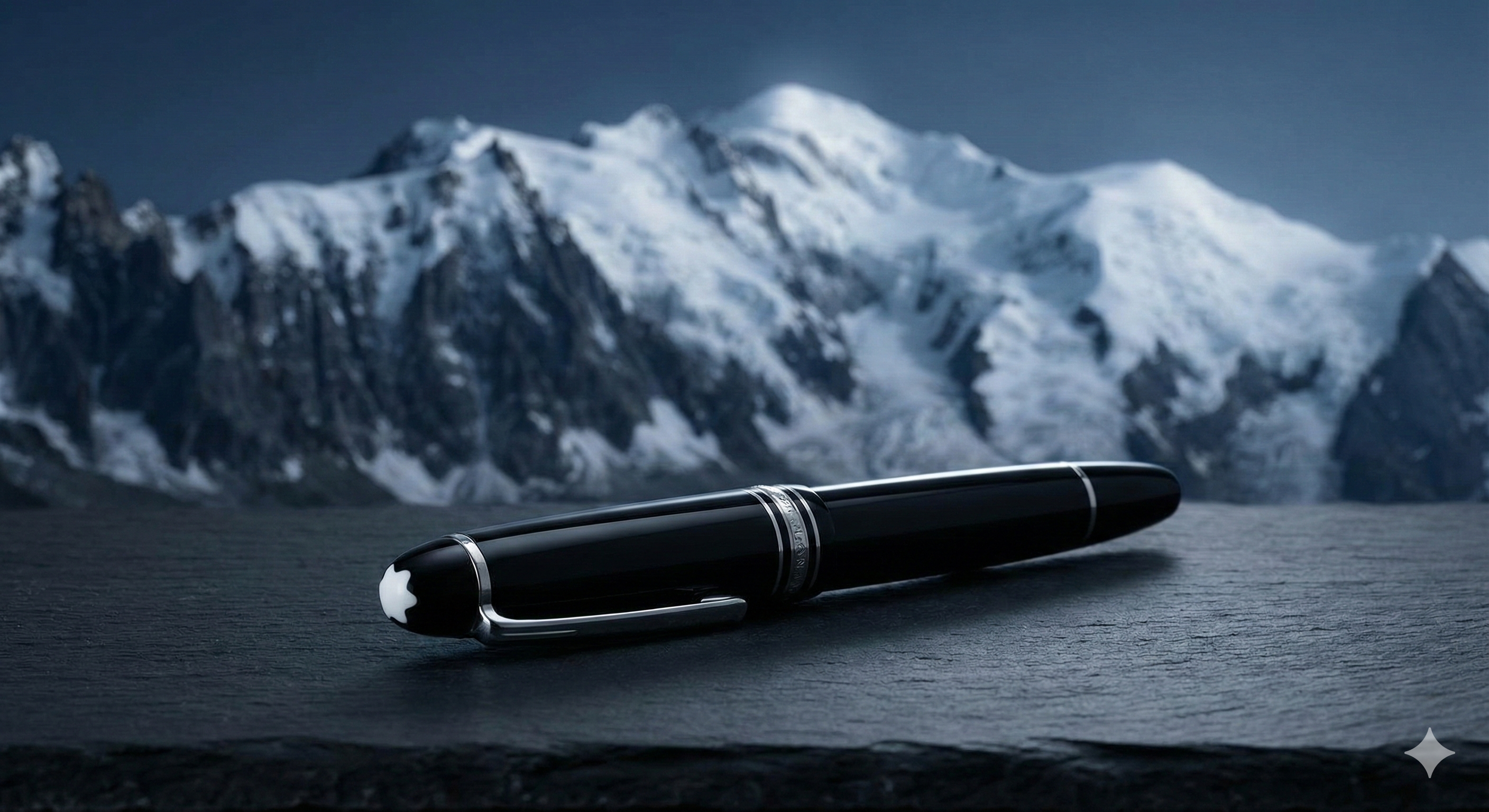
When executives around the world reach for a pen to sign important documents, millions of them reach for a Montblanc. The white star logo, representing the snow-capped peak of Europe's highest mountain, has become synonymous with success, sophistication, and impeccable taste.
The name evokes the romance of the French Alps, the exclusivity of the Swiss-French border region, and centuries of European refinement.
There's just one detail that might surprise you: Montblanc is German, not French. It was founded in Hamburg, one of Germany's most industrial cities, and the company has been headquartered there for over a century.
The Promise
The name "Mont Blanc" (French for "White Mountain") immediately conjures images of Europe's most majestic peak—the 4,808-metre summit that straddles the French-Italian border. It's a name that whispers of alpine exclusivity, of wealthy Europeans skiing in Chamonix, of the kind of rarefied atmosphere where luxury is simply expected.
The brand's promise extends beyond geography:
- The White Star: The rounded logo represents the snow-capped peak as seen from above—pure, pristine, elevated above the ordinary world
- French Luxury: France is the global capital of luxury goods. A French name borrows that prestige automatically
- Alpine Purity: Mountains suggest clean air, untouched nature, and timeless permanence
- Executive Status: Montblanc positioned itself as the pen for people who had "made it"
When you pull a Montblanc from your jacket pocket, you're not just writing—you're making a statement about who you are and what you've achieved.
The Reality
The truth behind the French facade is pure German industrial heritage:
Montblanc was founded in 1906 in Hamburg, Germany, originally as the "Simplo Filler Pen Company" (a much less romantic name). The founders were a Hamburg banker (Alfred Nehemias) and a Berlin engineer (August Eberstein), later joined by Wilhelm Dziambor. None of them were French.
The company's early products were purely functional—reliable fountain pens designed for the growing professional class. Germany in 1906 was a rising industrial power, and Hamburg was a centre of trade and manufacturing.
The French name came later, as the company sought to position itself in the emerging luxury market. "Simplo Filler Pen Company" sold tools. "Montblanc" sold status.
The Brilliant Trick
The Dual Identity
Montblanc's genius was understanding that different national stereotypes could be combined for maximum effect:
-
French Name = Luxury & Romance: France owns the global luxury market. Paris is where Louis Vuitton, Hermès, and Chanel were born. A French name suggests refined taste and artistic sensibility.
-
German Engineering = Quality & Precision: Germany is synonymous with engineering excellence. "German-made" implies durability, precision, and meticulous attention to detail.
By using a French name while maintaining German manufacturing and design, Montblanc got the best of both worlds. The name said "luxury," while the product said "quality." Customers received the emotional benefit of French prestige backed by the rational assurance of German reliability.
The Logo as Geography
The Montblanc logo—a white, rounded star—represents the snow-capped peak of Mont Blanc as seen from above. This wasn't just aesthetic; it was strategic geography.
The actual Mont Blanc sits on the border between France, Italy, and (nearby) Switzerland—three countries with powerful luxury associations. By claiming this mountain as their symbol, Montblanc associated themselves with all three national stereotypes simultaneously.
The "Meisterstück"
Montblanc's most famous product, the Meisterstück (German for "Masterpiece"), was introduced in 1924 and remains the brand's flagship pen nearly a century later.
The name itself is interesting—it's German, not French. This was intentional: for the product itself, German associations of craftsmanship and precision were more valuable than French associations of luxury. The French name branded the company; the German name branded the product.
What Montblanc Teaches Us
1. National Stereotypes Can Be Combined
Montblanc proves that you don't have to choose one country's associations. By using a French name with German manufacturing, the brand accessed two valuable stereotypes simultaneously.
2. Geography is Branding
The Mont Blanc mountain became a powerful brand asset—not because the company had any connection to it, but because they claimed it through naming and iconography.
3. Luxury is About Meaning, Not Function
Montblanc pens are fine writing instruments, but they're purchased for what they symbolise. The brand succeeded by understanding that luxury goods are primarily carriers of meaning.
The Verdict
Montblanc is perhaps the most successful example of "hybrid foreign branding"—using one country's name while leveraging another country's manufacturing reputation. Kinder pulled the same trick in reverse, selling Italian chocolate under a German name. The French name provides romance and luxury; the German heritage provides quality and reliability.
The white star has become one of the world's most recognisable luxury symbols, adorning products worth billions of dollars annually. All of it built on a simple insight: a mountain in France could sell pens from Hamburg better than any German name ever could.
Next in the series: Kinder, the Italian chocolate giant that used a German name to win the trust of mothers everywhere.